As global demand for power transmission, renewable energy, construction, and industrial automation continues to grow, selecting the appropriate conductor material has become a critical decision for cable manufacturers. Copper and aluminum each offer unique advantages, and understanding their characteristics can help manufacturers improve product performance while optimizing production costs.
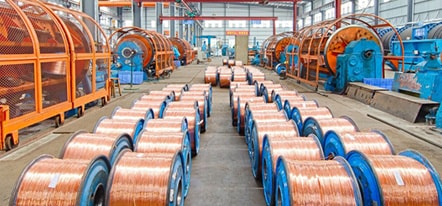
Copper remains the industry standard for applications requiring high electrical conductivity, excellent mechanical strength, and long service life. Because of its low electrical resistance, copper cables can carry higher currents with less energy loss, making them ideal for building wiring, industrial control cables, automotive wiring, and high-performance communication cables. Copper also offers superior flexibility, allowing it to withstand repeated bending and vibration without compromising reliability.
Aluminum, meanwhile, has become increasingly popular in projects where weight reduction and material cost are key considerations. Aluminum conductors are approximately one-third the weight of copper, making transportation, installation, and large-scale infrastructure projects more economical. Although aluminum has lower conductivity than copper, properly designed conductor sizes can achieve comparable performance in many power transmission and distribution applications.
For cable manufacturers, choosing between copper and aluminum is only part of the equation. The production equipment must also be capable of processing different conductor materials efficiently. Since copper and aluminum differ in hardness, elongation, surface characteristics, and tensile strength, production lines require precise control of wire drawing speed, annealing temperature, stranding tension, extrusion parameters, and take-up synchronization to ensure consistent product quality.
Modern cable production equipment equipped with intelligent control systems, automatic tension adjustment, and high-precision processing technology enables manufacturers to switch between copper and aluminum production with minimal downtime while maintaining high productivity and stable quality.
As an experienced wire and cable equipment supplier, we provide complete turnkey solutions covering wire drawing, annealing, bunching, stranding, extrusion, rewinding, and packaging. Our equipment is designed to support both copper and aluminum conductor production, helping customers adapt to changing market demands, improve manufacturing efficiency, and achieve long-term business growth.
With the right conductor material and the right production equipment, cable manufacturers can enhance product competitiveness, reduce production costs, and respond more effectively to the evolving needs of the global wire and cable industry.



 Tel: +86 17818847636


No.55, Boyong Road, Humen Town, Dongguan City, Guangdong, China
By continuing to use the site you agree to our privacy policy Terms and Conditions.




 EN
EN